Category: Organ & Detox Health
Date: October 17, 2025
🧠 What Are Kidney Stones?
Kidney stones are hard mineral deposits that form inside your kidneys. They develop when minerals and salts in the urine become too concentrated and stick together. These stones can vary in size — from a grain of sand to a golf ball — and may cause severe pain when passing through the urinary tract.
The most common symptoms include:
- Sharp lower back or side pain
- Pain during urination
- Blood in the urine
- Frequent urge to urinate
- Nausea or vomiting
⚗️ What Are Oxalates?
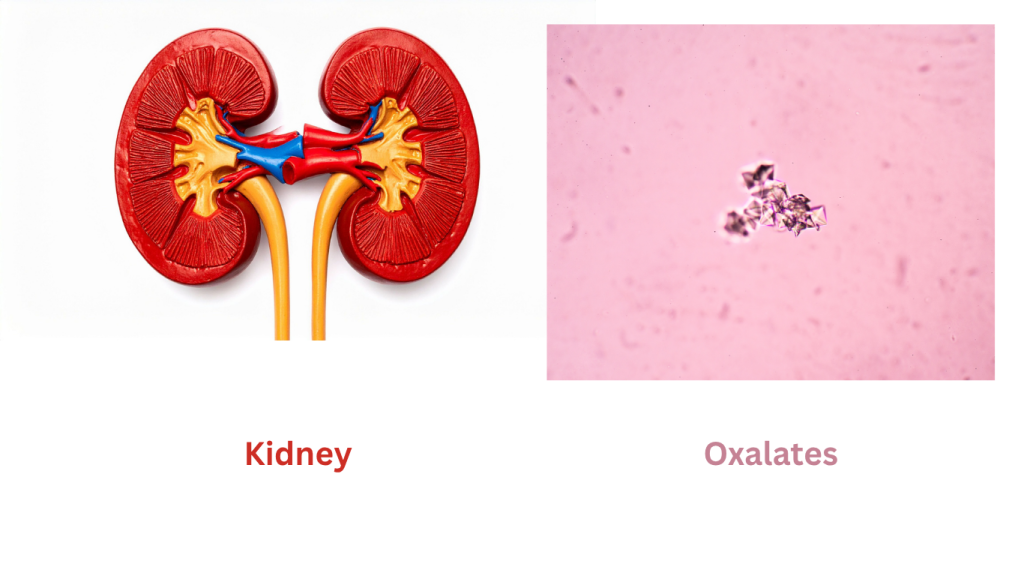
Oxalates (or oxalic acid) are natural compounds found in many plant foods. They aren’t harmful in small amounts, but when your body has too much oxalate — and not enough water or calcium to balance it — oxalate can bind with calcium to form crystals.
Over time, these crystals can grow into calcium oxalate kidney stones, which are the most common type.
🧩 How Oxalates Cause Kidney Stones
When you eat foods high in oxalate, your body normally eliminates the excess through urine. However, if you’re dehydrated or have high oxalate intake combined with low calcium consumption, the oxalate can attach to calcium in the kidneys and form stones.
That’s why drinking enough water and maintaining a balanced diet are key to prevention.
🥦 High-Oxalate Foods to Watch
Some healthy foods are naturally high in oxalates. You don’t need to avoid them completely, but moderation matters — especially if you’ve had kidney stones before.
Foods high in oxalates include:
- Spinach
- Beets
- Swiss chard
- Almonds and peanuts
- Sweet potatoes
- Rhubarb
- Soy products (like tofu and soy milk)
- Dark chocolate
🥛 Balancing Oxalates with Calcium
Here’s the secret: Calcium actually helps protect you from oxalate stones!
When you eat calcium-rich foods with oxalate-containing foods, calcium binds to oxalate in your gut — preventing it from reaching the kidneys.
Healthy calcium-rich foods to pair with meals:
- Yogurt
- Cheese
- Milk or calcium-fortified plant milks
- Canned salmon or sardines (with bones)
💧 Tips to Prevent Kidney Stones
- Stay hydrated: Drink at least 8–10 glasses of water daily.
- Eat balanced calcium: Don’t cut calcium from your diet.
- Limit salt and added sugars: They can increase calcium loss through urine.
- Moderate animal protein: Too much red meat or eggs can raise uric acid levels.
- Enjoy citrus fruits: Lemon and orange juice contain citrate, which helps prevent stones.
- Don’t overdo high-oxalate greens: Mix them with lower-oxalate veggies like kale, cabbage, or lettuce.
🍋 Foods That Help Protect the Kidneys
- Lemons & limes: Help dissolve small stones with natural citric acid.
- Bananas: Provide potassium that balances kidney function.
- Cucumbers & watermelon: High in water content to flush toxins.
- Whole grains: Support a healthy urinary system.
- Herbal teas (in moderation): Dandelion or nettle tea support kidney cleansing.
🧠 Final Thought
Kidney stones and oxalates are closely linked — but with smart food choices, proper hydration, and awareness, you can protect your kidneys and prevent painful stones. Balance, not restriction, is the key to healthy kidneys.